
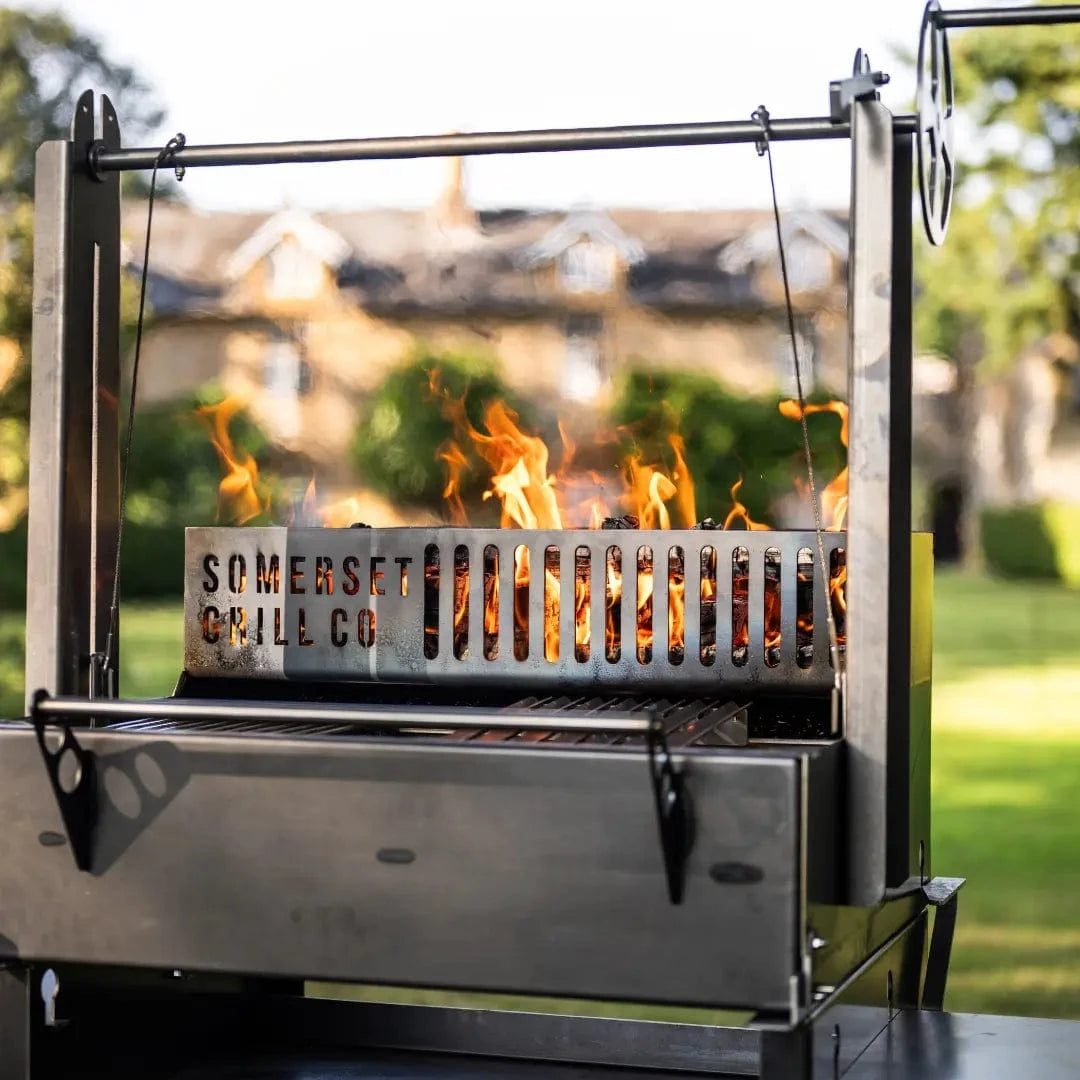
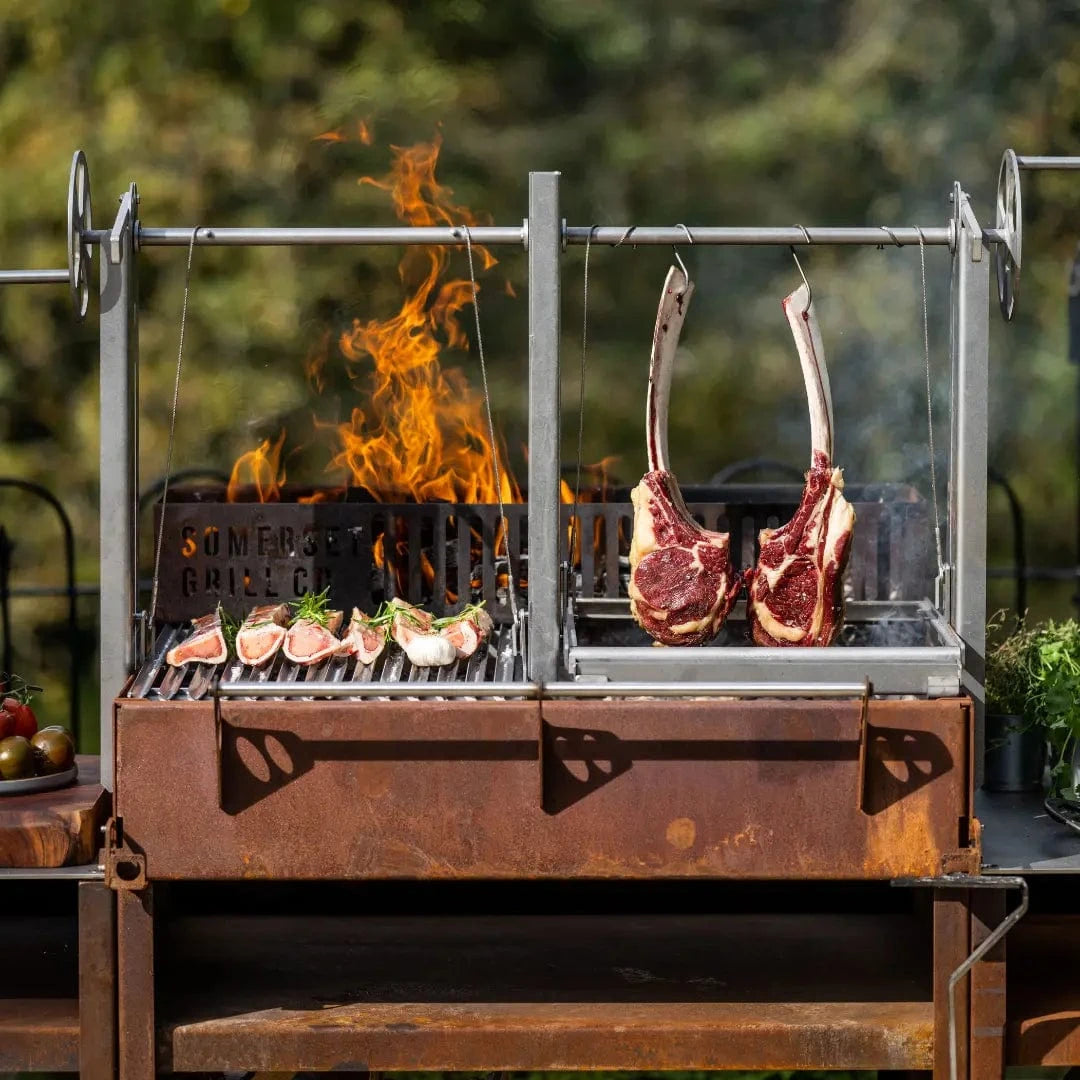
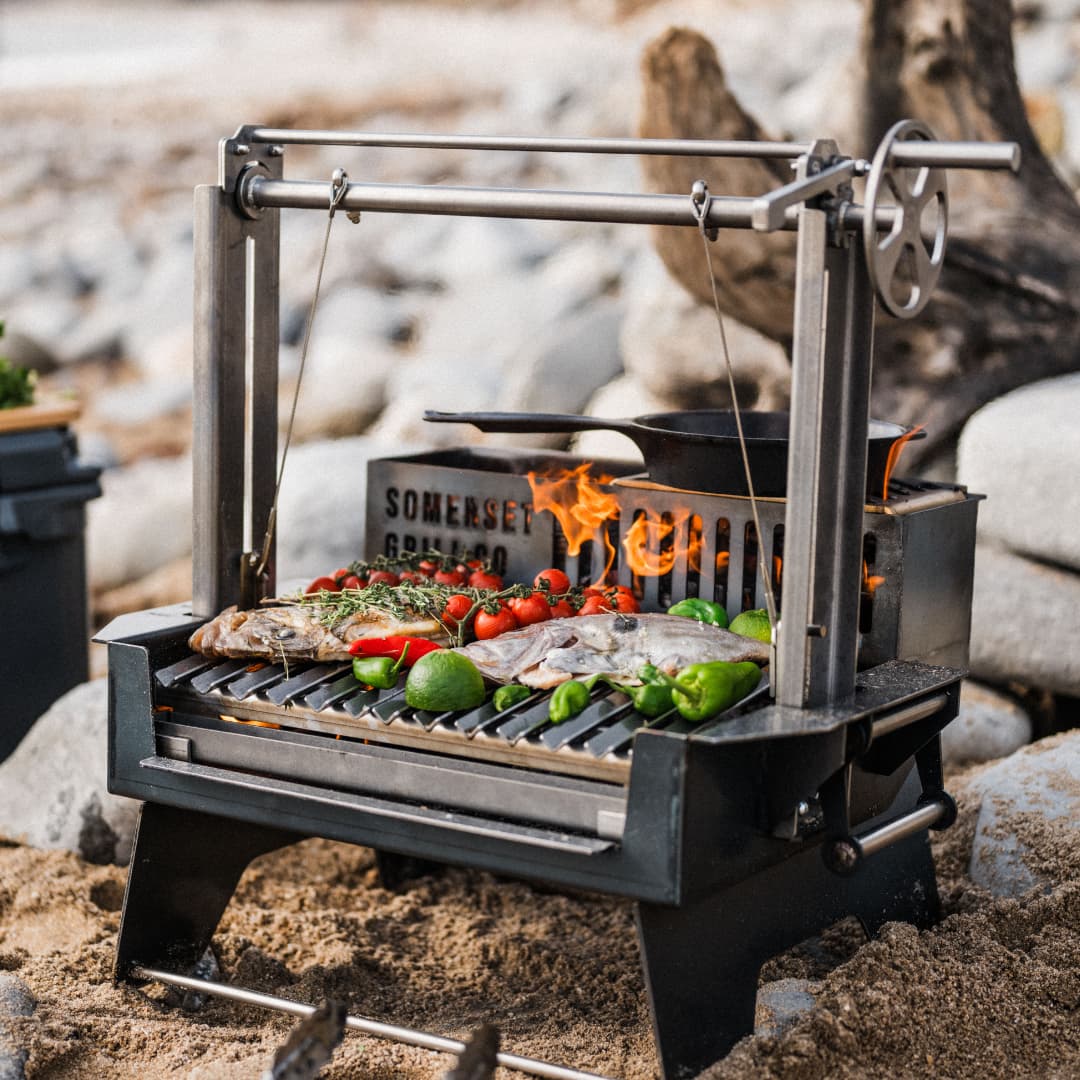

The Ember Maker is the firebox at the back of every Somerset Grill. Wood goes in, a fire gets going, and it does what its name promises: it turns logs into glowing, steady, cookable embers. That distinction matters. You’re not cooking over raw flames – you’re cooking over embers, a consistent, controllable heat source that a gas flame can’t replicate.
How it works
Think of the Ember Maker as a small, well-ventilated hearth. You load it with hardwood logs and light them using the top-down method. As the wood burns it produces two things: flames and embers. The flames are dramatic and look great. The embers are where the cooking happens.
As the wood burns down, the ember structure forms. Use the Ember Rake to knock the embers through the bottom into the cooking area, where they build a bed of glowing red and orange. That bed radiates consistent, even heat – no spikes, no sudden drops.
Air feeds the fire from beneath, so the wood burns efficiently and produces quality embers rather than cold, smothered ash. That airflow is part of how you manage the heat.

Why it sits at the back
On a standard barbecue you’re stuck with whatever heat the coals or gas give you. On a Somerset Grill, heat control is height: the grill frame moves up and down above the ember bed. Closer means more heat, further means gentler. That one relationship gives you a range of 40–400°C with a turn of the handle.
The Ember Maker’s job is to keep a consistent fire going behind you. Your job is to find the right height for whatever you’re cooking. Searing a ribeye? Drop the frame down. Slow shoulder of lamb? Raise it and let the heat work gently for hours. Use the hand test to read it.
Why embers beat flames
Flames flare, spike and scorch. Embers produce radiant heat that cooks evenly from all sides, builds proper char and gives wood-fired food its depth of flavour. The V-Grill plays its part too: fat drips into the V-shaped channels and away from the embers, so no fat hits the fire and there are no flare-ups. That’s the system working as it should.
Which wood
Dry, seasoned hardwood – ash and beech are ideal. They burn cleanly, make good embers and add a subtle flavour. Softwood or wet wood burns badly, smokes and leaves bitter residue. Our firewood guide lists suppliers we trust.
Looking after it
The Ember Maker is the same steel as the rest of the grill and built to take serious heat for years. On a Gunmetal grill, a quick wipe of oil after each cook – while it’s still slightly warm – keeps the steel in good condition, like seasoning a cast-iron pan. On Cor-Ten, the patina that forms is the protection; it weathers, deepens in colour and needs nothing extra. Either way, we stand behind every weld: 10 years on Gunmetal, 20 on Cor-Ten.
The bottom line
The Ember Maker isn’t complicated. It’s a well-designed firebox that does one thing brilliantly: turns wood into steady, cookable embers you can control with confidence. It’s the same across the range – Asado, Grande or the Asado Mini. Build your fire, let the embers develop, find your height, cook.


Comments
0 comments