

Most barbecues go in the shed in October. A Somerset Grill doesn’t, and the cooks that come off it between now and March are some of the best of the year. Here’s why the cold months suit fire cooking.
The ingredients are better
Autumn and winter bring the produce that fire does most for: root vegetables, squashes, apples, game and the big joints that want a long roast. Smoke and ember heat lift earthy, robust flavours in a way a summer salad never needed.
The heat is the point
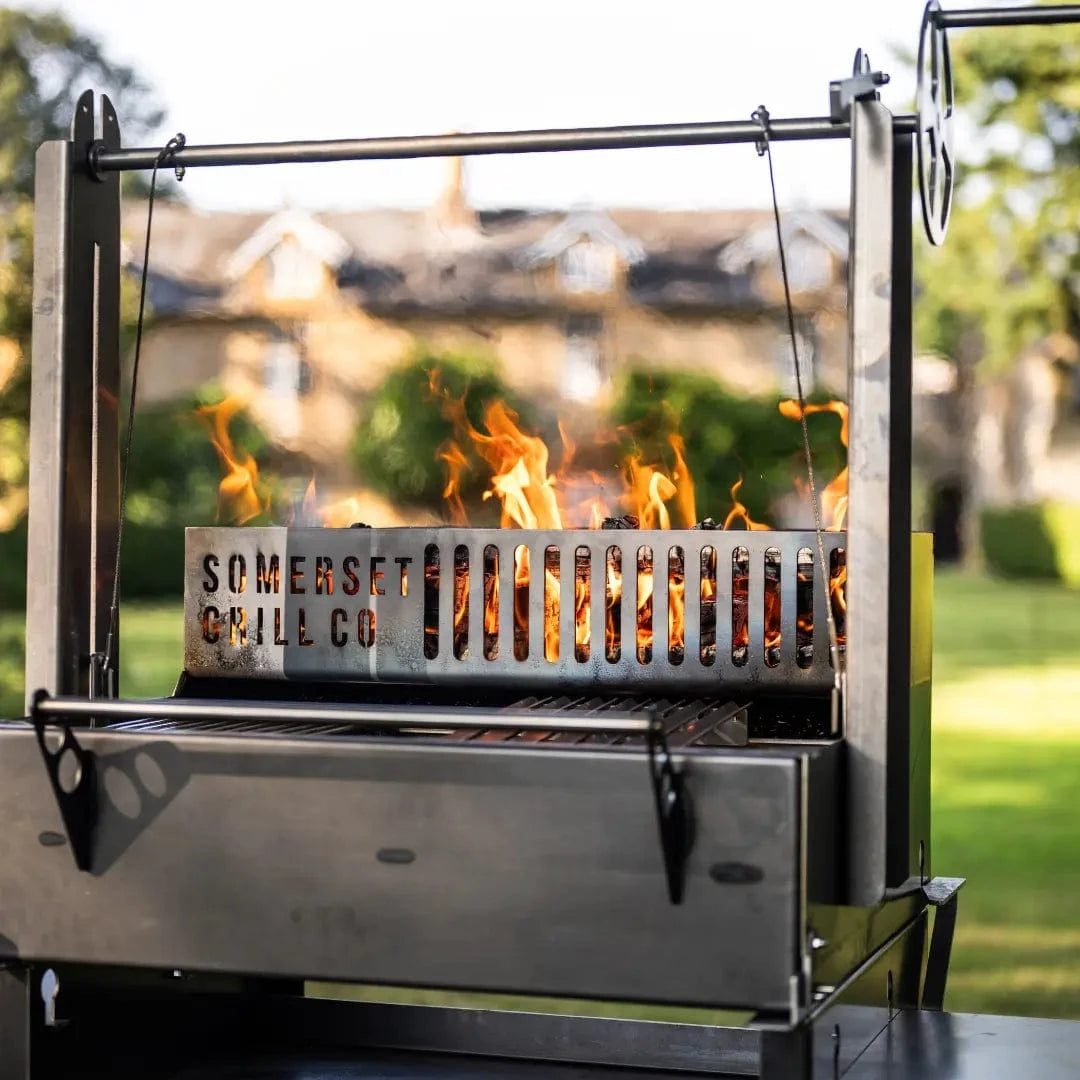
Standing around a bed of embers in a coat is one of the great pleasures of a British winter. The radiant heat from the Ember Maker keeps the cook warm, keeps the guests close and turns a cold garden into somewhere people want to be.
Long cooks suit short days
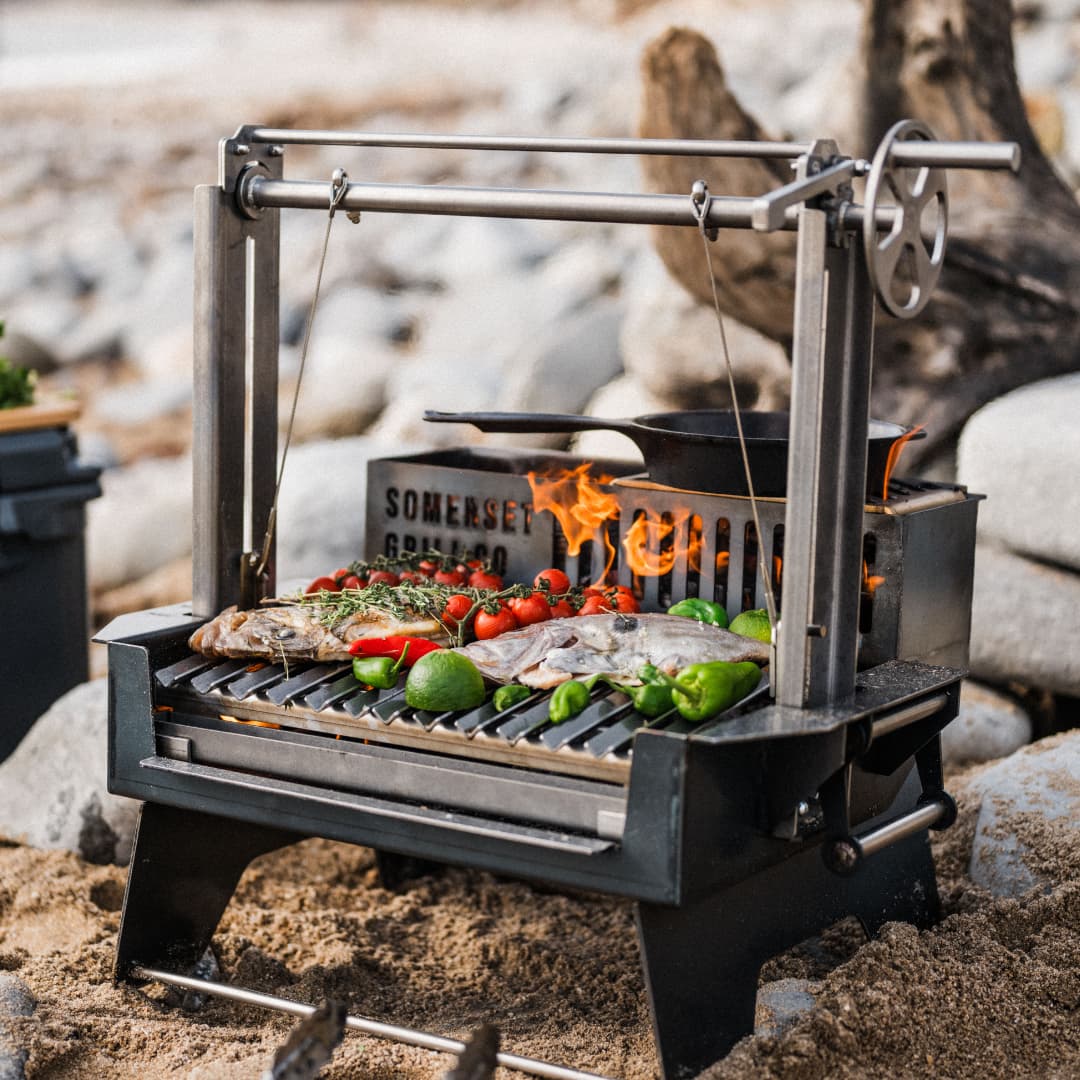
A slow shoulder of lamb on the rotisserie, a chilli in the Dutch oven, a stack of roasted roots on the Chapa. Winter cooking is about patience and pots, and the grill’s height adjustment gives you the gentle, steady heat those cooks need for hours.
It’s a good use of the wood pile
Seasoned local hardwood is at its cheapest and most plentiful. A grill that runs on logs rather than gas is the more sustainable way to cook outdoors, and never more so than when the wood is stacked by the back door anyway.
The theatre
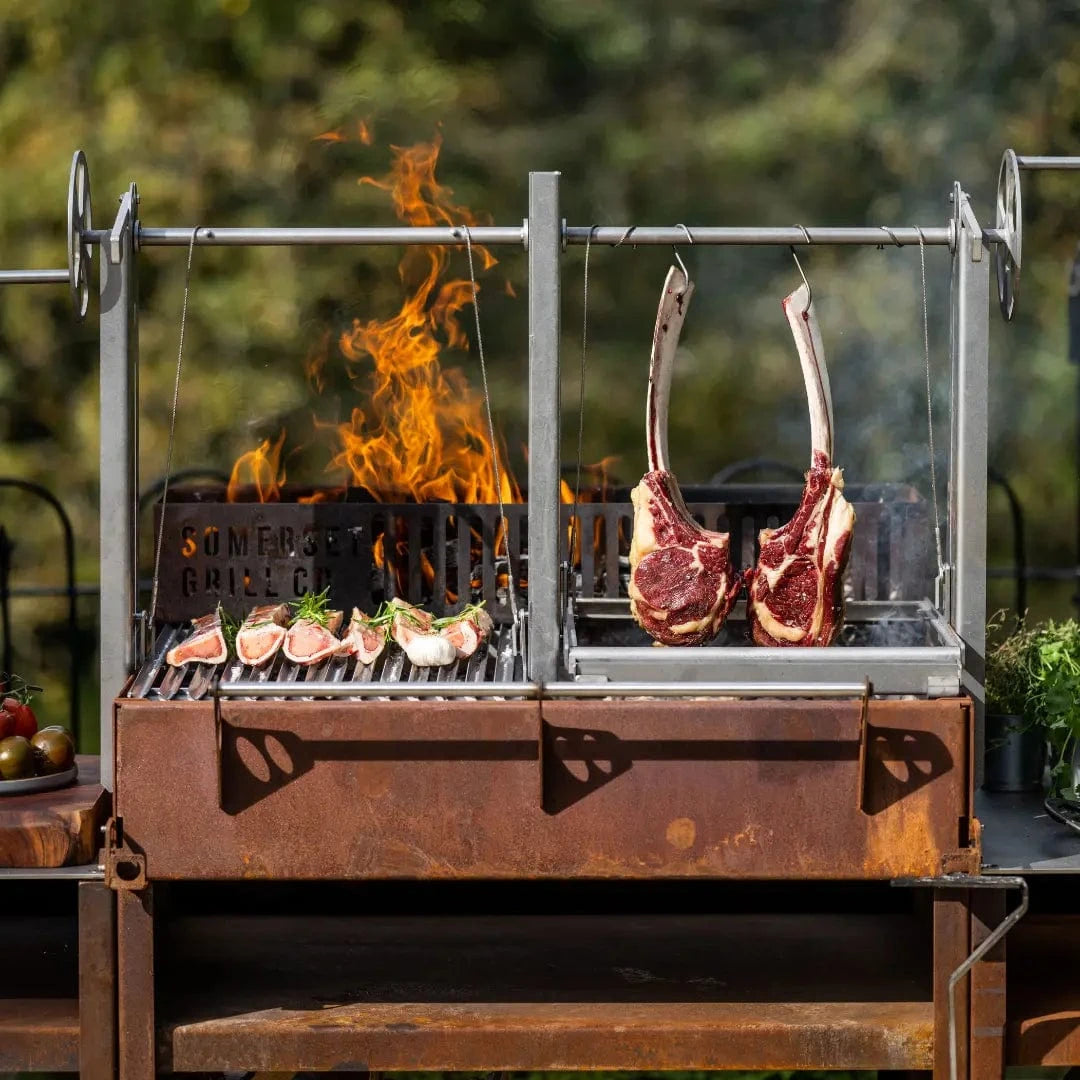
Flames against a dark sky, smoke drifting across the garden, a whole bird turning slowly. Winter fire cooking looks and sounds as good as it tastes – and it’s why people remember the meal.
Winter tips
Give the fire an extra fifteen minutes to build a proper ember bed in the cold. Keep a small fire going in one corner of the Ember Maker throughout the cook for a steady supply of new embers. And put the cover on when you’re done – a wet grill in January is nobody’s friend.
Related: How to light a fire · Recipes


Comments
0 comments