

Wood-fired grills range from a few hundred pounds to several thousand. Photographs don't tell you where the money went. These do, and below is how we handle each one.
Start With the Fire
Wood fire is the toughest thing you'll ever put a piece of cooking equipment through. Charcoal burns steady and predictable. Wood doesn't. It flares to 600°C and more where a log catches, drops as it collapses, then flares again when you add the next one. Every cook is hundreds of these cycles.
Steel expands as it heats and shrinks as it cools. Thin steel does this unevenly, warps, and cracks at the welds. So we build for that punishment, week after week, for years. Everything below follows from this.
Steel Thickness
The single biggest difference between grills, so ask for it in millimetres. Ours run from 3 mm on the base to 5 mm on the Ember Maker, because that's where the fire lives.
The Tap Test
You can hear thickness. Tap the side of a grill with your knuckle. Thin steel rings like a biscuit tin. Thick steel gives a dull, short thud, the sound of something solid.
Come and tap ours at Somercroft Farm.
Weight
Weight is thickness you can feel. An Asado Grill body weighs about 65 kg and takes 2 people to lift. That's the steel doing its job.
The Finish
We don't paint our grills. Every coating we tested burned off, starting at the firebox, and the flakes went somewhere. So ours are raw steel.
Gunmetal is oiled and seasoned like a cast-iron pan. It asks for 2 minutes of care after a cook, and in return you can repair it for life. Cor-Ten weathers and forms its own protective patina. Both look better every year.
How You Control the Heat
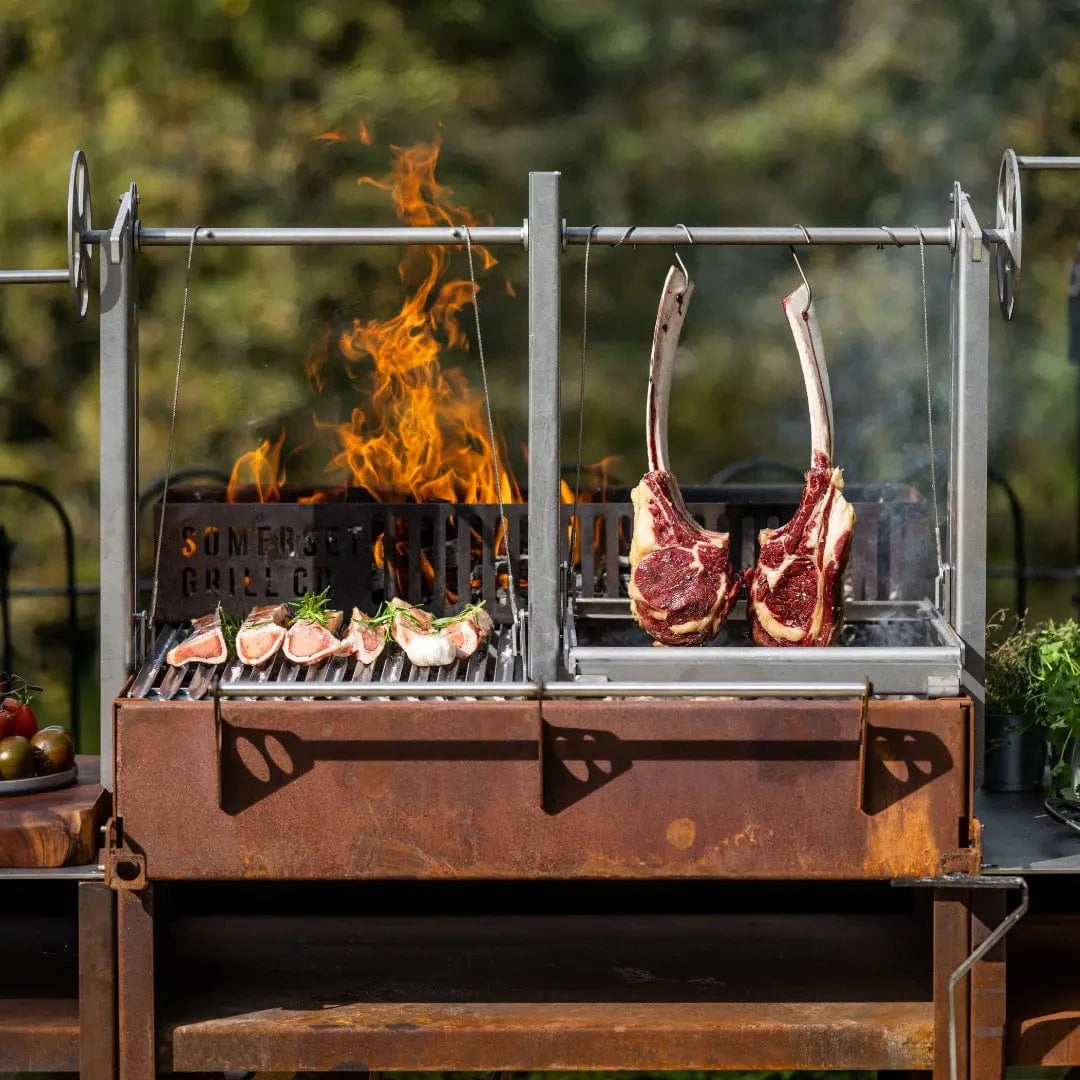
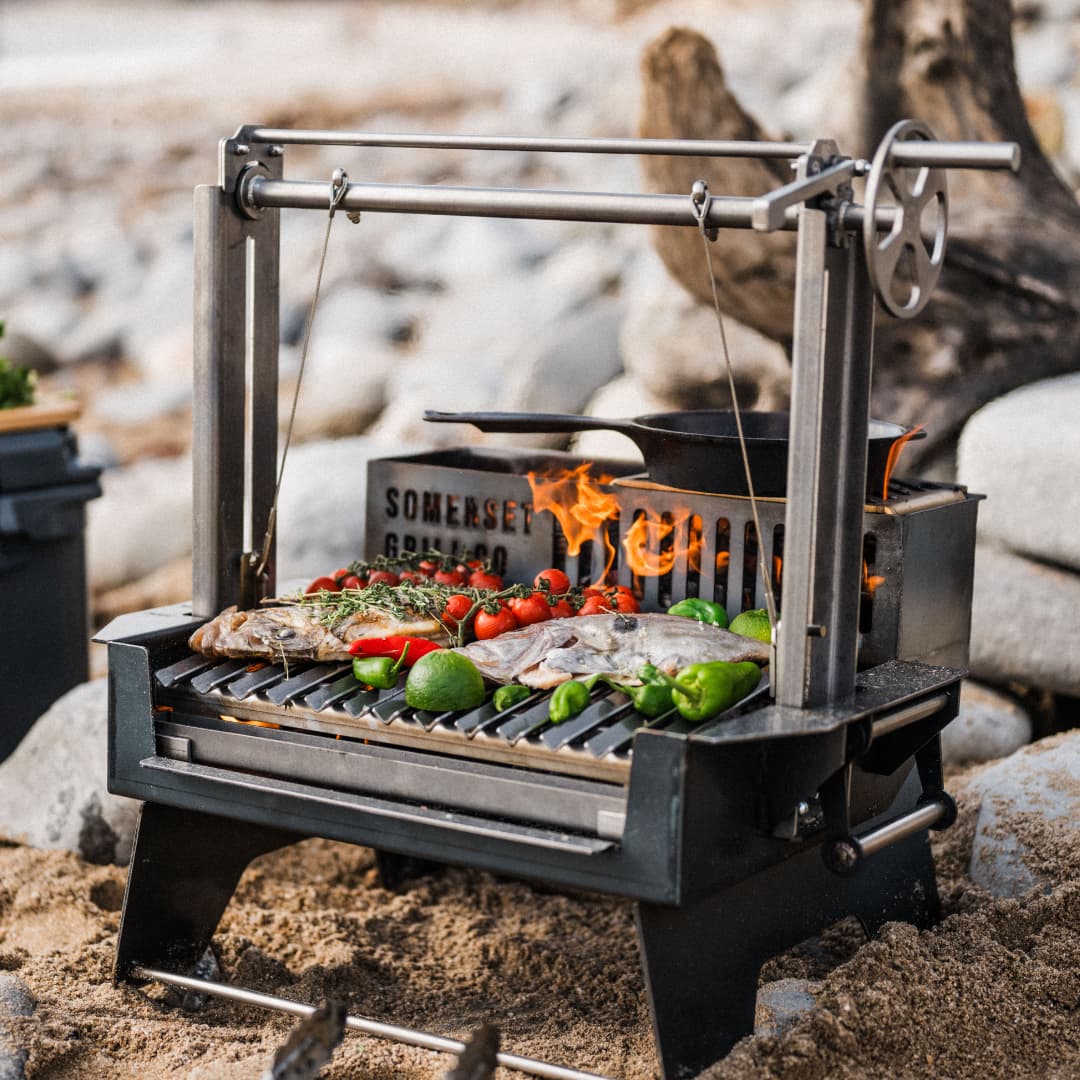
Turn the handle and the Grill Frame moves up or down over the embers. Lower for searing, higher for slow cooks, 40–400°C from the same fire, and you can see the food the whole time.
Whatever you buy, look for a frame that moves smoothly with one hand and a height range big enough to make a real difference to the temperature.
Where the Fire Lives
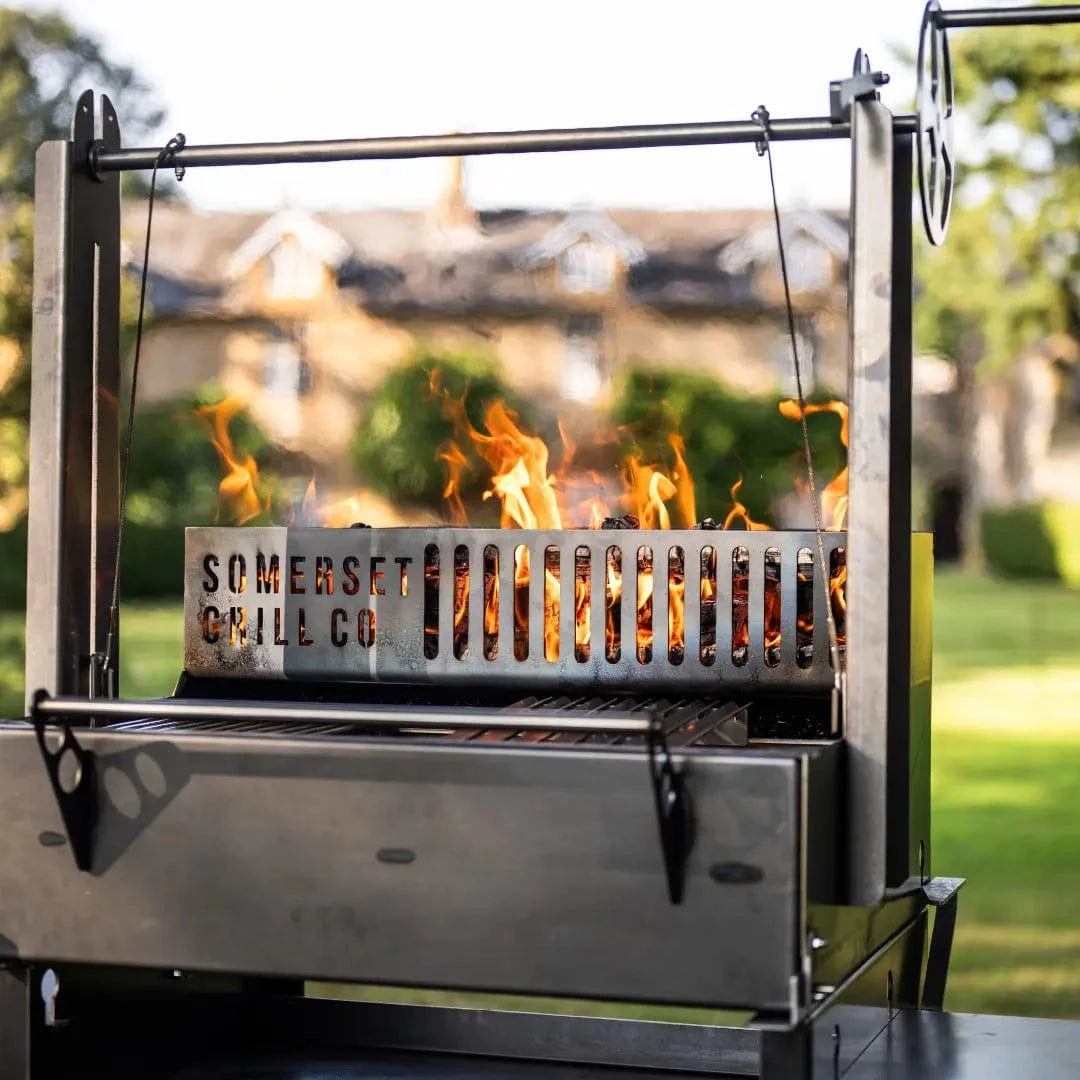
Our fire lives in the Ember Maker at the back. Logs burn there and drop embers into the cooking area. You cook over embers, not flames, and feed the fire whenever you like without moving the food.
The Cooking Surface
Our V Grill is inspired by Argentina. V-shaped bars carry fat away from the embers, so flare-ups are rare and a fatty rack of lamb can sit still over the heat.
The Welds
Look at them. Even, continuous welds are the joints that take years of heat cycling. Ours are welded at Somercroft Farm, and a robot welder is joining the workshop so every weld is laid the same way, every time.
What We Left Off
Everything on a Somerset Grill is there for a reason, so some things aren't on it. No chrome. No fixed lid, because height control does the job on its own. If you want to bake or smoke under a lid now and then, the Tapa lifts on and off.
The Warranty
A long warranty on a steel grill tells you the maker expects it to last. Ours is 10 years on Gunmetal and 20 years on Cor-Ten and 316 Stainless, and it covers burnout, which is the failure that matters.
Come and See
Photographs only go so far. Come and see them at Somercroft Farm and tap the steel yourself, or book a video call and we'll show you round.
Related: How Your Somerset Grill Is Built · Cor-Ten: What the Rust Is Doing · What Is a Traditional Argentinian Grill?


Comments
0 comments